First contact
Write an email or leave a voice message. Every request is treated with discretion and respect.
 QUIS UT DEUS
Quis Ut Deus · Who is like God
A Catholic space for prayer, discernment and pastoral support — guided by the light of Christ and hope.
Discover the pathPause. Find the words that strengthen you.
A Catholic space for prayer and discernment
A place to begin
Quis Ut Deus was created as a place of Catholic prayer, sound formation and pastoral discernment. It is for people seeking peace of heart, strength in faith and responsible help on the path towards spiritual freedom.
The community of faith
Spiritual growth matures in relationship with Christ — through Sacred Scripture, prayer, the sacraments, the community of the Church and trust in Mary’s protection. These pillars set the direction of this ministry.
“You will know the truth, and the truth will set you free.”
The Gospel according to John 8:32
Prayer and discernment
This space is intended for people experiencing spiritual difficulties, anxiety or questions connected with a possible experience of evil. The first step remains a calm conversation, prayer and responsible pastoral discernment.
Write an email or leave a voice message. Every request is treated with discretion and respect.
A conversation helps name the situation and choose the appropriate path for further support.
Prayer for liberation may be offered and, where personal discernment calls for it, the ministry of exorcism.
Content and pastoral conversation do not replace diagnosis, treatment or help during an urgent mental-health crisis.

About
I serve as Vicar General in the Old Catholic Church of Jesus the Merciful Messiah in Poland and worldwide. As a clergyman, bishop and exorcist, I offer a free ministry of spiritual accompaniment, prayer and discernment for people seeking light and peace of heart.
Vicar General of the Old Catholic Church of Jesus the Merciful Messiah
Member of the Order of Saint Michael the Archangel
Prayer for liberation and the ministry of exorcism following individual pastoral discernment
Affiliation
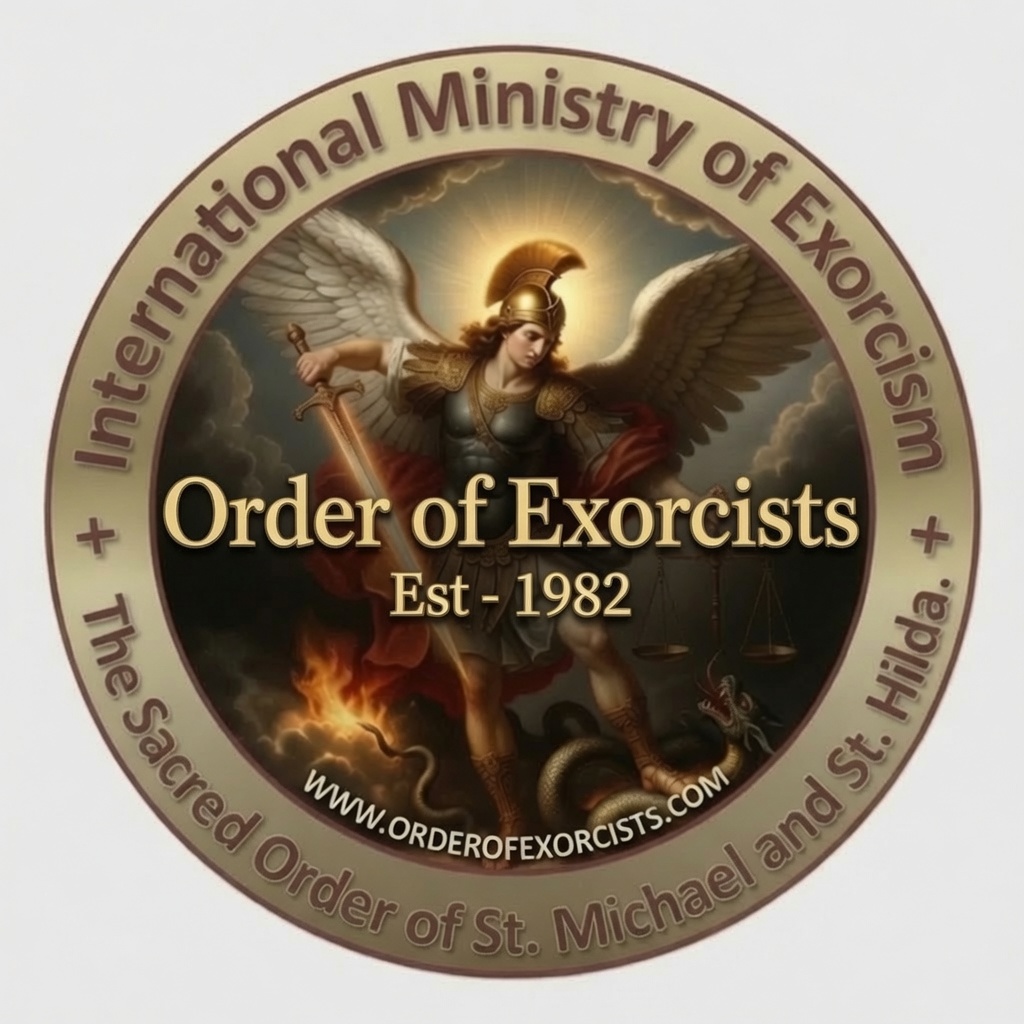
The site owner shares a certificate concerning personal membership in the Order of Exorcists. The material is presented as a personal credential supplied for publication.
This link leads to the external website of the Order of Exorcists.
Contact
If you would like pastoral support or wish to request prayer, write by email or leave a voice message through WhatsApp.
Write or leave a voice message
bp.arkadiusz.wsparcie@gmail.comContact should be a calm and safe way to begin a conversation and discern the right form of support.
News
Announcements, information about religious events and brief reflections on the life of faith will appear here.
Word for today
Brief reflections to help readers pause with the word of the liturgy and relate it to everyday life of faith.
Library
Materials will be organised so that it is easy to find what is needed at a particular point in the spiritual journey — from daily faith to responsible discernment.
To read
To listen and watch
This section will contain recordings, short videos and links to material published by the site owner.

Useful prayers
The collected prayers can be opened and read at an unhurried pace. They are shared for personal prayer and formation.
The complete prayer texts are available in Polish, English and Italian.
A traditional prayer for protection and light.
A personal prayer invoking the Holy Trinity and the intercession of the saints.
An extended prayer to Christ, prayed in the light of the Holy Spirit.
A plea for God’s protection, peace and mercy.
A prayer to Christ for protection and forgiveness of sins.
Two short prayers for freedom, healing and protection.
An intercessory prayer to the guardian of the Church and families.
A Marian prayer of entrustment that leads to Christ.
A simple prayer of trust in Christ's mercy.
Under Mary’s protection
In prayer we turn to the Blessed Virgin Mary as Mother of the Church and intercessor. Her intercession reminds us that the path to spiritual strength leads towards Christ, peace and hope.
Mary, lead us towards the light of your Son.
Spiritual concerns
This section is not for fear or diagnosis. Situations requiring particularly thorough pastoral discernment are exceptional. In complex cases, a sound medical, psychological and psychiatric assessment is necessary before further pastoral steps are considered.
Name what you are experiencing without rushing or judging yourself.
Do not make decisions in isolation. Depending on the situation, speak with a pastor, psychologist, psychiatrist or doctor.
In an urgent mental-health crisis or a threat to life, contact medical or emergency services immediately.
A guide to first steps
A calm guide to pastoral language, possible natural explanations and safe next steps. It is not a tool for self-diagnosis.
A powerful experience is not yet an explanation of its cause. In a threat to life or health, seek emergency medical help immediately.
In Christian spiritual language, temptation means a common inner struggle: thoughts, desires or impulses that pull a person away from goodness, truth, responsibility, relationships or lived faith.
It may involve discouragement from prayer, personal growth or repairing a relationship, as well as the temptation to lie, retaliate, isolate oneself or hurt oneself or others.
Experiencing temptation is not evidence of a special threat. It often becomes stronger with fatigue, stress, conflict, loneliness or lack of sleep.
It helps to name the problem without dramatizing it, return to an ordinary rhythm of life, pray, draw on the sacraments and speak with a trusted person.
In pastoral conversation, the words pressure or oppression may describe a lasting sense of being overwhelmed, hopeless, anxious or discouraged, expressed in the language of faith. This is not a diagnosis or evidence of an external cause.
Some people interpret in this way a series of difficult events: a sense of “constant bad luck”, sudden job loss, worsening finances, the end of a long relationship or distance from someone close.
Related experiences can include escalating, seemingly unprovoked family arguments, outbursts of anger, irritability, insomnia, exhaustion and a sense of losing control of one’s emotions.
None of these experiences is, by itself, a sign of a spiritual cause. Conflict may call for conversation, family therapy, legal help or support in situations of violence; anger can be related to stress, trauma, substance use, mood difficulties or sleep deprivation.
Unexplained wounds, bruises or bodily changes should first be assessed by a doctor. Serious injury, bleeding, signs of infection, confusion or suspected violence should never delay medical help.
A responsible path is to record the facts, take ordinary practical steps, and pursue prayer and pastoral conversation alongside them.
In pastoral language, this word may describe a persistent focus on evil, guilt, fear or an assumed spiritual danger.
Reasons to seek help can include constantly checking for “signs”, needing repeated reassurance, watching fear-inducing content, or withdrawing from work, relationships and sleep.
Intrusive thoughts, compulsions and severe anxiety can require consultation with a doctor, psychologist or psychiatrist. Do not perform rituals “just in case” or buy paid protection.
Prayer can support a person, but it does not replace professional assessment or treatment for anxiety, obsessive difficulties and other mental-health concerns.
In Catholic teaching, possession is a concept applied to situations assessed with the greatest care. A solemn exorcism is a specific rite, not an ordinary prayer or a service on demand.
No one should declare themselves or another person possessed. Before any possible referral to an exorcist, a sound medical, psychological and psychiatric assessment is necessary.
Do not stop medication, isolate a person, use force, record a crisis or attempt rituals on one’s own.
Hearing voices, seeing things unavailable to others, severe confusion, inability to care for oneself or a risk of harm require prompt medical and psychiatric assessment.
The term infestation appears in some pastoral conversations about unease connected with a home, room or objects. It is not an invitation to private “cleansings” or creating an atmosphere of fear.
First check installations, ventilation, mould, noise, building safety, pests and sleep quality; also consider whether the place is linked with trauma, bereavement or conflict.
Do not use paid “removal” services. If prayer concerning a place is desired, the proper course is calm contact with a responsible pastor.
The common phrase “animal infestation” is not a uniform doctrinal assessment. A change in an animal’s behaviour needs veterinary assessment first; the animal must never be harmed or treated as guilty.
The Catholic Catechism names divination and magic as practices contrary to the worship due to God. These terms are intended to help understanding, not to identify alleged perpetrators.[2]
Divination includes attempts to gain hidden knowledge through cards, horoscopes, pendulums, mediums or similar practices. The safest response is to stop and not seek further consultations “for certainty”.
Magic, spells and rituals “for good luck” attribute automatic active or protective power to an act or an object. Do not answer with counter-rituals or purchase “cleansing”.
In ordinary language, a curse means wishing someone harm or making a threat. When a threat is real, preserve evidence and contact the relevant services; do not respond with retaliation or “counteracting”.
The “evil eye” is a popular, imprecise term and is not evidence of anyone’s guilt. Do not accuse neighbours, relatives or colleagues.
Spiritism and mediumship involve attempts to contact spirits through séances or mediums. A person who has taken part and feels uneasy should not repeat them out of curiosity.
Prayer and the presence of loved ones can accompany someone in crisis, but they must not delay life-saving or health care.
Call emergency services or go to the nearest emergency department when there is intent to harm oneself or others, violent behaviour, severe confusion or loss of contact with reality.
Urgent help is also needed for serious or unexplained injury, bleeding, signs of infection, suspected violence, a crisis after substance use, medication changes, a head injury or prolonged insomnia.
When in doubt, choose safety: contact medical or crisis support, and treat pastoral support as accompanying help, not a substitute.
Responsible discernment is discreet, patient and based on facts, not on a ready-made diagnosis.
Note when the difficulty began, what came before it and how it affects sleep, health, relationships and work.
Include illnesses, medications, substance use, trauma, bereavement, stress, family and financial difficulties. An assessment by a doctor, psychologist or psychiatrist is not a denial of faith.
Return to the ordinary sources of spiritual life: prayer, the Eucharist, the sacrament of reconciliation, Sacred Scripture, the Rosary, an honest moral life and a healthy community.
Avoid isolation, sensational content, publishing assumptions about yourself or others, and actions that feed fear.
How to respond
Spiritual hygiene is not an extraordinary practice, but a faithful rhythm of life with God. The sacraments, prayer, Sacred Scripture, the Rosary and work on personal weaknesses build maturity, peace and freedom of heart.
Regular Confession and faithful participation in Sunday Mass help us return to grace and bring order to the heart.
Set a regular time for personal prayer, silence and gratitude — even when prayer feels difficult.
Daily reading of God’s Word leads towards the truth that sets us free and teaches us to see life in the light of Christ.
The Rosary, rooted in the events of Christ’s life, helps us enter contemplative prayer and entrust daily life to Mary.
No particular pastoral intervention replaces a healthy spiritual and moral life, regular conversion and an honest struggle with one’s own weaknesses.
The beginning
This space leads from a moment of stillness towards prayer, discernment and wise support. Every step can become the beginning of renewed peace of heart.
Go to contact